
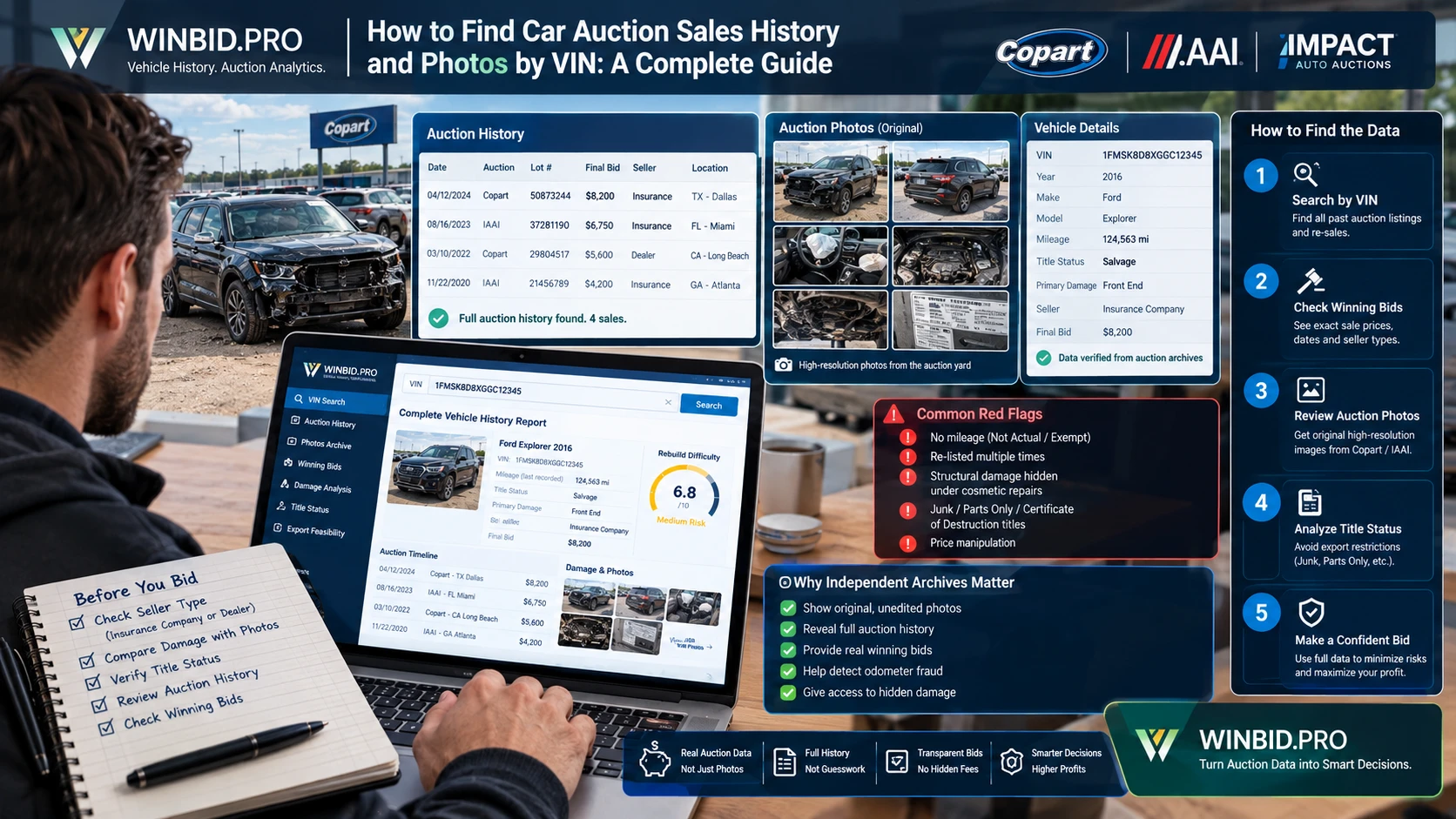
How to Find Car Auction Sales History and Photos by VIN: A Complete Guide
Buying a vehicle imported from US salvage auctions like Copart, IAAI, or Impact Auto can offer incredible savings. However, navigating the secondary auto market requires strict due diligence. Sellers often wash titles, repair severe structural damage cosmetically, or tamper with odometers before listing a car on domestic marketplaces.
To avoid falling into a costly trap, you need to look beyond a seller's word and access raw historical records directly from the auction source. Here is how you can locate past sales data, inspect original damage photos, and verify winning bids using a vehicle identification number.
Why Is Salvage Auction History Hidden or Altered?
When insurance companies write off a vehicle, it is sold through auto salvage auctions in its raw, damaged state. Curators and dealers frequently purchase these vehicles, perform budget-friendly repairs, and relist them for sale—sometimes putting them back through the auction block multiple times to artificially inflate value.
Common red flags hidden behind re-listed auction lots include:
- Cosmetic Masking: Structural frame damage hidden beneath new bumpers and fresh paint.
- Secondary Collisions: Vehicles damaged twice in separate incidents but sold with photos showing only the latest minor damage.
- Price Manipulation: Dealers buying a car for $3,000 at auction and listing it elsewhere as a clean-title car for $15,000.
How to Trace Past Auction Sales and Final Bids
Official auction platforms like Copart or IAAI typically remove listing details once a lot is finalized and picked up from the yard. However, independent archives continuously capture and index this data before it disappears.
1. Perform an Auction History Search
To verify if a car was ever involved in an insurance loss, perform a comprehensive auction vin search. This will immediately surface all historic index listings associated with the VIN, showing every instance the vehicle was staged for sale across major North American yards.
2. Verify Actual Winning Bids
Understanding what a dealer paid for a salvage vehicle gives you powerful leverage during price negotiations. By choosing to check winning bids by VIN, you can review exact closing prices, final sales dates, and seller types (insurance company vs. re-seller dealer) to determine the true profit margin on the car.
Uncovering Original Copart and IAAI Damage Photos
Pictures taken at the auction lot by yard staff are the most honest record of a car's true condition. These high-resolution photos capture deployed airbags, engine bay displacement, undercarriage rust, and broken glass long before any repair work takes place.
If a seller provides photos showing an immaculate exterior, comparing those images against the archived salvage record is essential. By reviewing raw car auction photos by VIN, you can evaluate the primary impact zones, check whether the suspension was compressed, and verify if key electronic control modules were intact before the vehicle was rebuilt.
Pre-Bidding Checklist for Auction Buyers
- Verify the Seller Category: Always check whether the seller listed on the lot is an Insurance Company or a Dealer/Pure Sale. Insurance sales carry significantly less risk of hidden manipulation.
- Match Primary Damage Ratings: Ensure the primary damage (e.g., Front End) aligns with the actual visual photos in the archive.
- Check Title Status: Watch out for Junk, Parts Only, or Non-Repairable certificates, which can prevent you from legally registering the car in your jurisdiction.
Running a comprehensive history check before placing a bid or making an offer is the single most effective way to protect your investment. By cross-referencing raw photo archives, verified bid data, and independent VIN records, you eliminate the guesswork and ensure that your next vehicle purchase is built on transparency, safety, and true market value.


