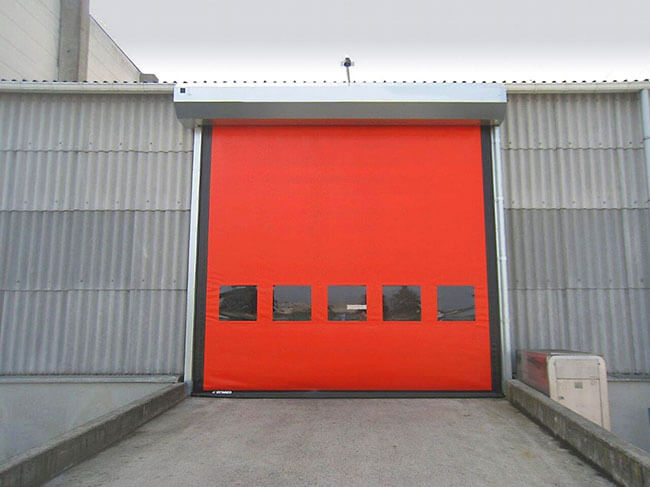
A high-speed door is usually installed because an ordinary door is slowing something down: forklifts queue at an opening, cold air escapes, dust moves between zones or workers keep leaving a door open because closing it takes too long.
For a High Speed Door Canada project, traffic pattern and environment tell you more than the fastest opening-speed figure.
A warehouse door and a washdown door are different jobs
TDK’s high speed door range includes models such as the HT1000, HT2000 and HT3000 clean-room door. The HT1000 is listed with opening speeds up to 1.5 m/s and a 1.0 mm fabric curtain, while the HT3000 uses a stainless-steel frame and is positioned for clean or washdown environments.
Those differences matter more than a small change in speed. A food-processing area may need surfaces that tolerate frequent cleaning. A logistics opening may care more about impact exposure, radar activation and traffic flow.
TDK Doors also supplies traffic, FRP, fiberglass and cold-room doors, so a facility can compare different door types rather than forcing a high-speed design into every opening.
Triggering method changes how the door feels in daily use
Radar, induction loops, remote controls and pull cords all work, but the practical choice depends on who is approaching. Forklifts need a trigger that activates early enough for the vehicle to maintain a safe pace. Pedestrian traffic may need a different detection zone so the door does not cycle every time someone walks nearby.
Too-sensitive activation wastes energy and increases cycles. Activation that is too late causes drivers to brake and wait.
External openings need their own check
An external door sees pressure changes that an internal partition does not. TDK lists wind-load limits for its fabric high-speed models, so the building location and exposure should be part of the specification.
For heated, cooled or refrigerated areas, closing speed and edge sealing also influence energy loss. A door can open very quickly and still perform poorly if it stays open longer than necessary because the sensor logic is wrong.
Before ordering, count traffic for a normal shift, identify the largest vehicle, measure the clear opening and note whether the area is internal, external, cold, dusty or regularly washed.
That basic site information usually tells you more about a suitable door than a comparison based only on metres per second.